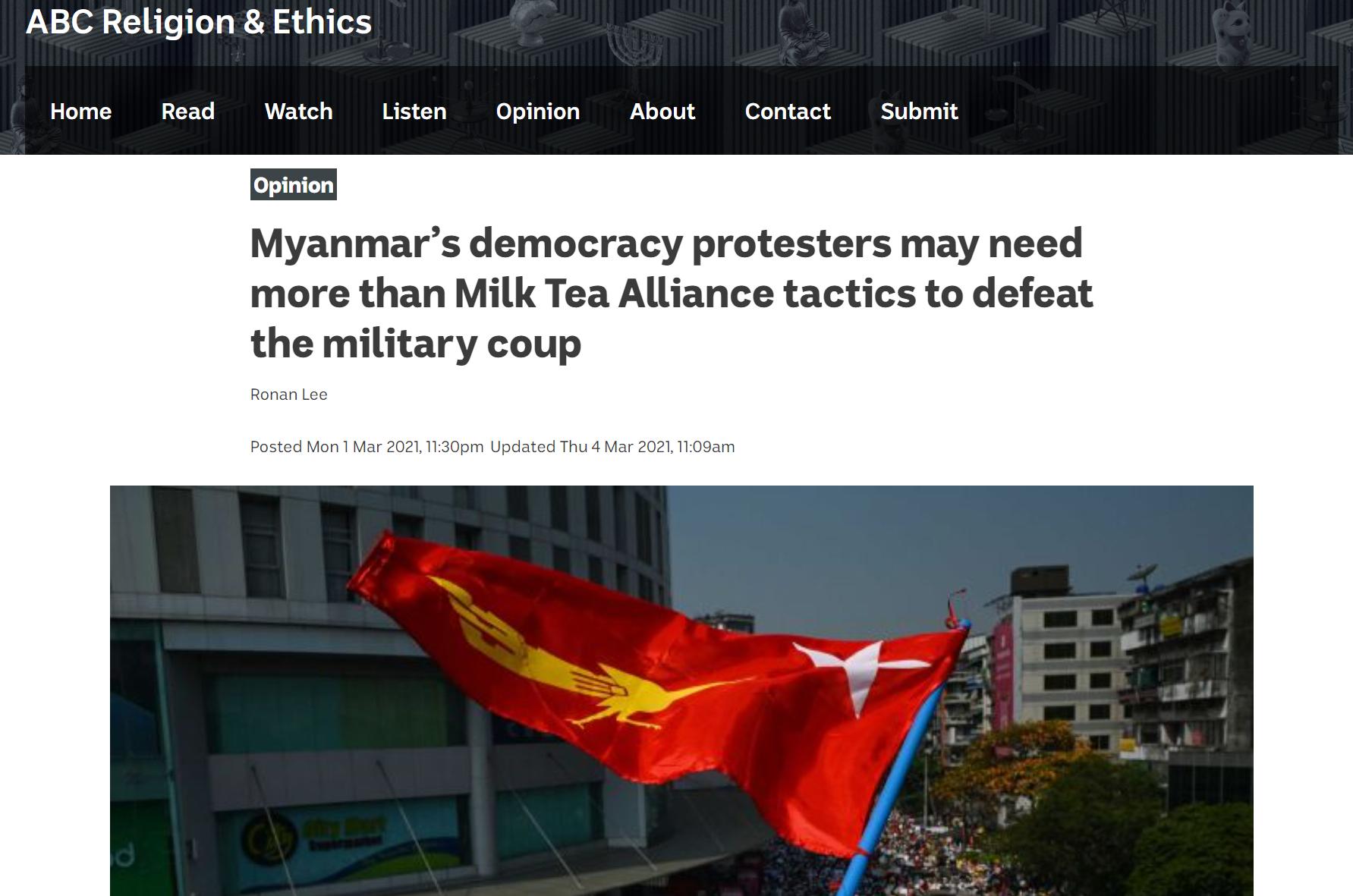
Myanmar’s popular leader, Aung San Suu Kyi, who has been in custody since the country’s military seized power in a coup on February 1, has been charged with a new crime: that of violating the country’s National Disaster Management Law. It’s proof, if any were needed, of the extent to which the country’s military leaders are willing to subvert the COVID crisis to their own ends.
A brutal crackdown could happen any day. Military violence is expected every day. Soldiers have casually killed peaceful protesters throughout the four weeks since Myanmar’s military undertook a coup to remove the country’s civilian government. Military violence has incrementally, but steadily increased. Bravely, millions of peaceful protesters still take to Myanmar’s streets to oppose the military coup and demand the release of the country’s civilian leaders including Aung San Suu Kyi. By employing tactics learned from other recent Asian protest movements, they have seemingly confounded Myanmar’s military, which has struggled to deal with the nature of protests and their scale. READ THE FULL ARTICLE HERE.
This article was first published by ABC Religion & Ethics on 15 February, 2021.
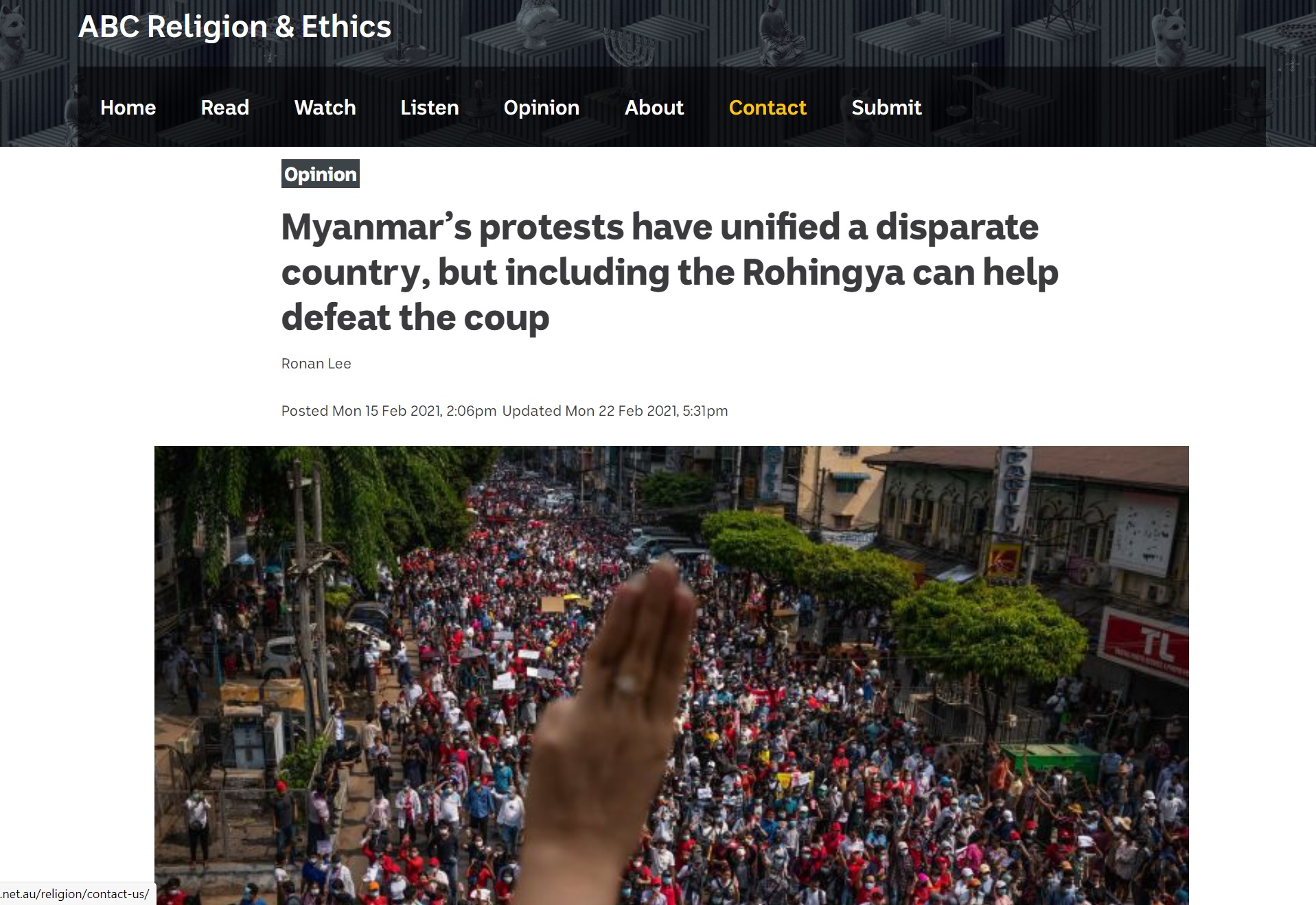
Saffron robed Buddhist monks, leather clad punks, shirtless muscle-bound hunks, taffeta ballgown wearing “princes protesters”, chefs in toques, black robed lawyers, construction workers in hard hats, nurses and doctors in scrubs, tattooed martial artists, nat spirit worshipers, civil servants, drag queens, trade unionists, farmers, teachers, taxi drivers, Christians, Hindus, Muslims, the old, the young, women, men, girls and boys — this week and last, these were just some of the groups who joined the biggest protests against military rule ever seen in Myanmar. READ THE ARTICLE HERE.
Foreign firms are under pressure to cut ties with the military following the February 1 coup. Protests against the February 1 military coup in Myanmar are spreading, despite internet shutdowns and threats of arrests. International firms are under growing pressure to cut ties with the army’s vast business empire.
For years, rights groups and the United Nations have revealed extensive corruption by military-controlled firms, with revenues going directly to army generals and their families. So will pulling foreign investment be enough to force the coup leaders to bring back civilian rule?
Presenter: Mohammed Jamjoom
Guests:
Debbie Stothard – Founder and coordinator of ALTSEAN-Burma, a network of ASEAN organisations working to support human rights and democracy in Myanmar
Ronan Lee – Visiting scholar at Queen Mary University of London, author of Myanmar’s Rohingya Genocide
Tharaphi Than – Associate professor at Northern Illinois University
My forthcoming book “Myanmar’s Rohingya Genocide: Identity, History and Hate Speech” has a cover! It is now available for pre-order from @ibtauris @BloomsburyBooks: https://t.co/77P3pym93n
Citation: Lee, R. (2019). Myanmar’s Citizenship Law as State Crime: A Case for the International Criminal Court. State Crime Journal, 8(2), 241-279. doi:10.13169/statecrime.8.2.0241
Abstract: This article argues that Myanmar’s authorities subject the Rohingya to human rights violations that can be accurately described as the crime of apartheid. Myanmar’s discriminatory application of its citizenship laws and processes is central to this crime, yet while Myanmar is not a signatory to the Rome Statute of the International Criminal Court, the court’s jurisdiction remains limited. However, Myanmar’s government has brought this crime to the territory of International Criminal Court (ICC) member state Bangladesh. Because Myanmar’s government insists upon Rohingya participation in discriminatory citizenship processes as a precondition of refugee repatriation to Myanmar, this presents the ICC with an opportunity to assert its jurisdiction. While current ICC investigation focusses mostly on alleged crimes committed by the Myanmar military, crimes associated with Myanmar’s citizenship processes would likely be the responsibility of Myanmar’s civilian government, including State Counsellor Aung San Suu Kyi, making Myanmar’s civilian political leaders liable for the first time to ICC prosecution.
Rohingya Muslims remaining in Myanmar’s Rakhine state still face a “serious risk of genocide,” U.N. investigators said earlier this month. They warned that the repatriation of a million already driven from the country by the army remains “impossible.”
Myanmar’s authorities, however, have declared Rakhine state safe enough for Rohingya refugees that fled to neighboring Bangladesh to return.
Sadly, the authorities of Bangladesh appear increasingly willing to accept Myanmar’s assurances that now is a suitable time to begin the repatriation. This fails to understand the cause of the crisis and risks further harm to the vulnerable, maligned Muslim community. Read the full article at the Globe Post here.
My article about state media in Myanmar was published in a special issue of the International Journal of Communication about Extreme Speech and Global Digital Cultures. The complete issue can be accessed by visiting the International Journal of Communication.
Lee, R. 2019. “Extreme Speech in Myanmar: The Role of State Media in the Rohingya Forced Migration Crisis”. International Journal of Communication, 13(2019): 3203-3224.
Abstract: This article considers the role of the state authorities in perpetrating extreme speech and the processes by which state power is used in normalizing hateful expressions against minoritized communities. Drawing attention to Myanmar’s 2017 Rohingya crisis, a human rights and humanitarian catastrophe, the article examines how the state media publication, the Global New Light of Myanmar newspaper, has actively produced anti-Rohingya speech in its editions and influenced violent narratives about the Rohingya Muslims circulating on social media. It shows how official media contributed to a political environment where anti-Rohingya speech was made acceptable and where rights abuses against the group were excused. While regulators often consider the role of social media platforms like Facebook as conduits for the spread of extreme speech, this case study shows that extreme speech by state actors using state media ought to be similarly considered a major concern for scholarship and policy.
Politicizing Islam: The Islamic Revival in France and India, by Z. Fareen Parvez. New York, Oxford University Press, 2017, xiv+269pp., £59(hardback), ISBN 9780190225247
Z. Fareen Parvez’s book Politicizing Islam: The Islamic Revival in France and India examines the lived experiences of Muslims and considers the limitations and dangers of accepting simplistic contemporary stereotypes of faithful Muslims. This is compelling subject matter at a time when openly religious Muslims are frequently assumed to harbour radical sympathies and can face discrimination and violence. ……
You can read my complete book review for Ethnic and Racial Studieshere.
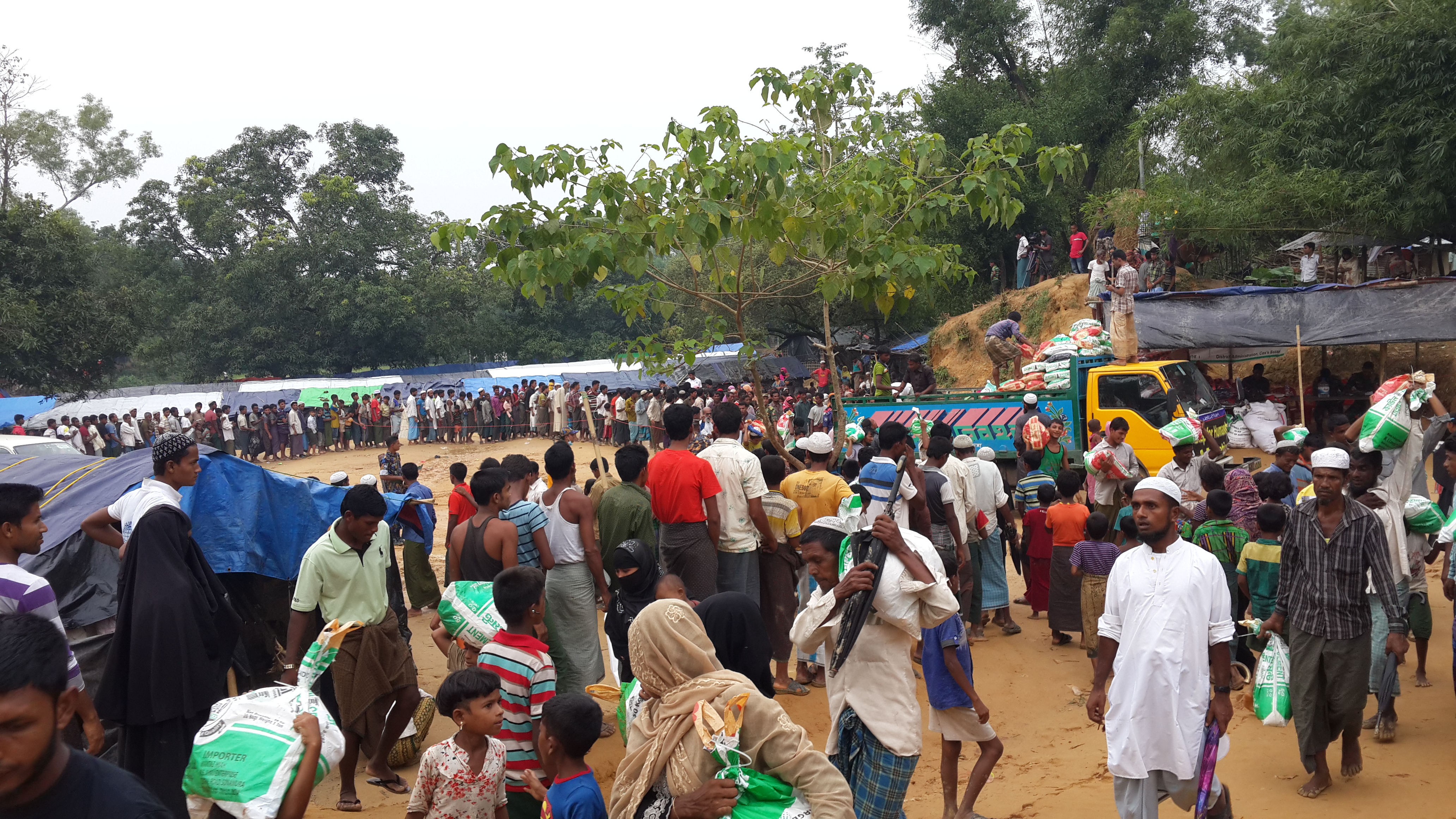
If there’s anything positive about the sprawling Rohingya refugee camps near Cox’s Bazaar, Bangladesh, it’s that the residents – despite their appalling recent experiences and obvious deprivation – are at least safe here from Myanmar’s military. Read my article for The Conversation here.





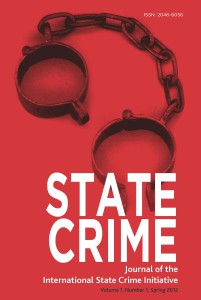 My article about how Myanmar uses its citizenship law to enforce apartheid conditions against the Rohingya was published in the State Crime Journal recently. You can access the article ‘
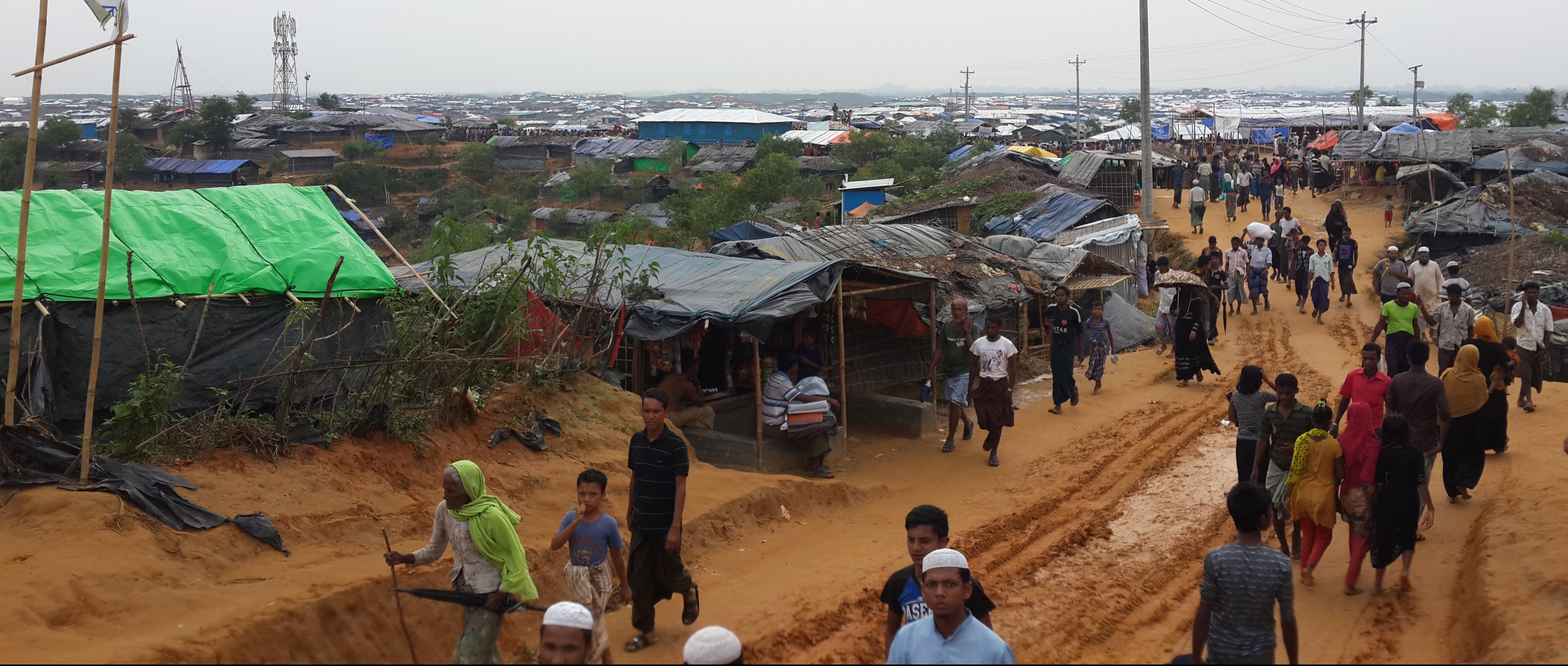 Rohingya Muslims remaining in Myanmar’s Rakhine state still face a “serious risk of genocide,” U.N. investigators said earlier this month. They warned that the repatriation of a million already driven from the country by the army remains “impossible.”
 My article about state media in Myanmar was published in a special issue of the International Journal of Communication about Extreme Speech and Global Digital Cultures. The complete issue can be accessed by visiting the
 Politicizing Islam: The Islamic Revival in France and India, by Z. Fareen Parvez. New York, Oxford University Press, 2017, xiv+269pp., £59(hardback), ISBN 9780190225247