Queen Mary’s International State Crime Initiative is pleased to present the launch of Dr Ronan Lee’s Myanmar’s Rohingya Genocide: Identity, History and Hate Speech on Tuesday 4 May, 16:00 -17:15 BST. Book your place here: https://t.co/1cXCmp5aMW@Ronan_Lee@StateCrime
Last month, a video emerged out of Myanmar of soldiers beating a man before forcing him to crawl along the street like a dog on his hands and knees. It highlighted the disrespect Myanmar’s military, known as the Tatmadaw, routinely display towards civilians and was a chilling reminder of the violence and exploitation that characterised previous periods of military rule. This jarringly discomforting video will have surprised few in Myanmar, confirming what they already know too well about the country’s military. But it gives foreign observers important insight into the mindset of a soldiery who regard civilians as their inferiors and who are prepared to aggressively defend military economic and political privilege. This was far from an isolated example, and sadly, as videos of Myanmar military criminality go, it was fairly tame. READ THE FULL ARTICLE HERE.
How should the UK respond to Myanmar’s ambassador being locked out of the embassy and forced from his job? @Ronan_Lee tells me “It’s a real test for the UK to match its rhetoric with action” “ #WhatsHappeninginMyanmarpic.twitter.com/THnsP7Qjq5
Inside Myanmar’s military crackdown and political situation with author of ‘Myanmar's Rohingya Genocide: Identity, History and Hate Speech’ Dr. @Ronan_Lee
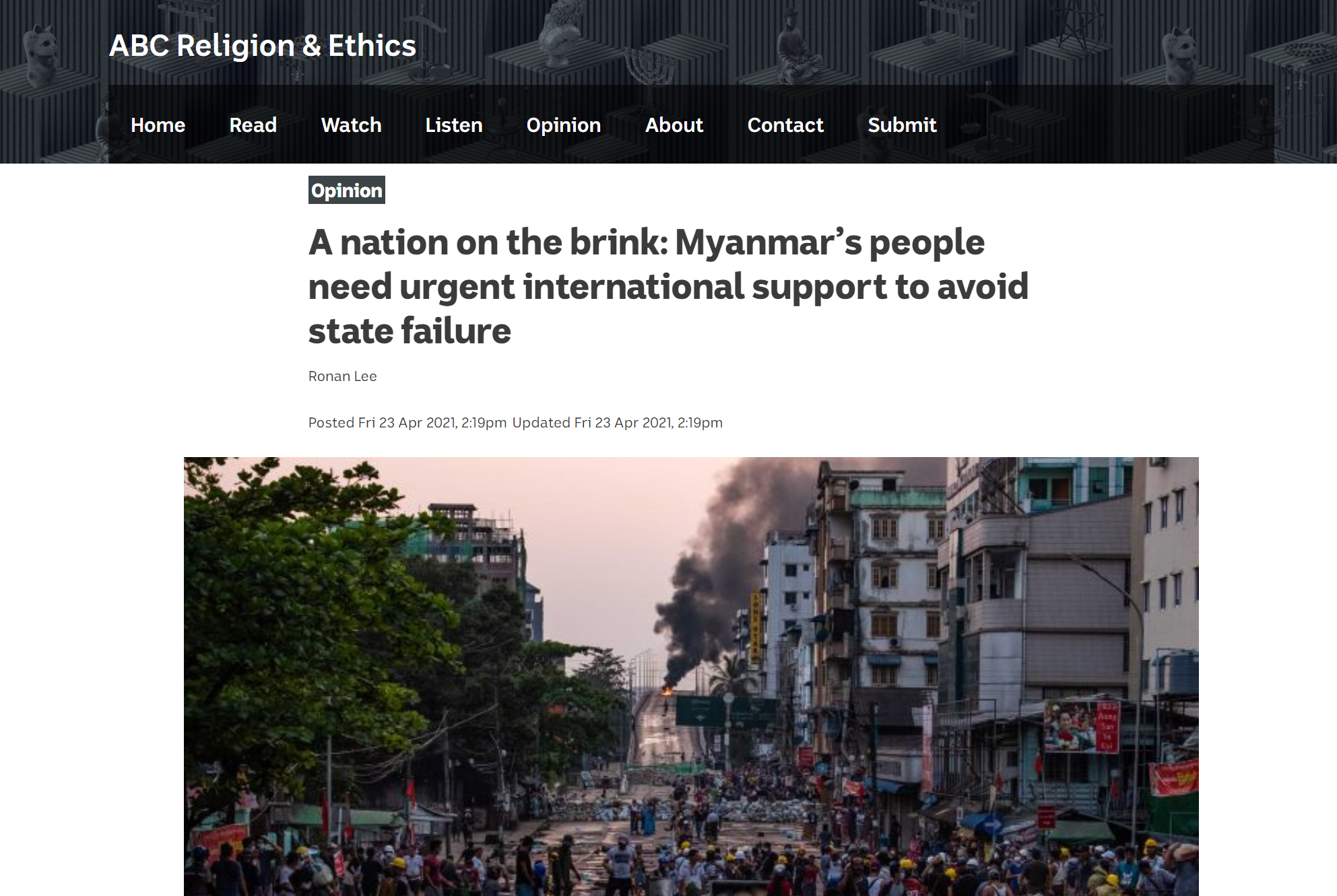
Myanmar’s popular leader, Aung San Suu Kyi, who has been in custody since the country’s military seized power in a coup on February 1, has been charged with a new crime: that of violating the country’s National Disaster Management Law. It’s proof, if any were needed, of the extent to which the country’s military leaders are willing to subvert the COVID crisis to their own ends.
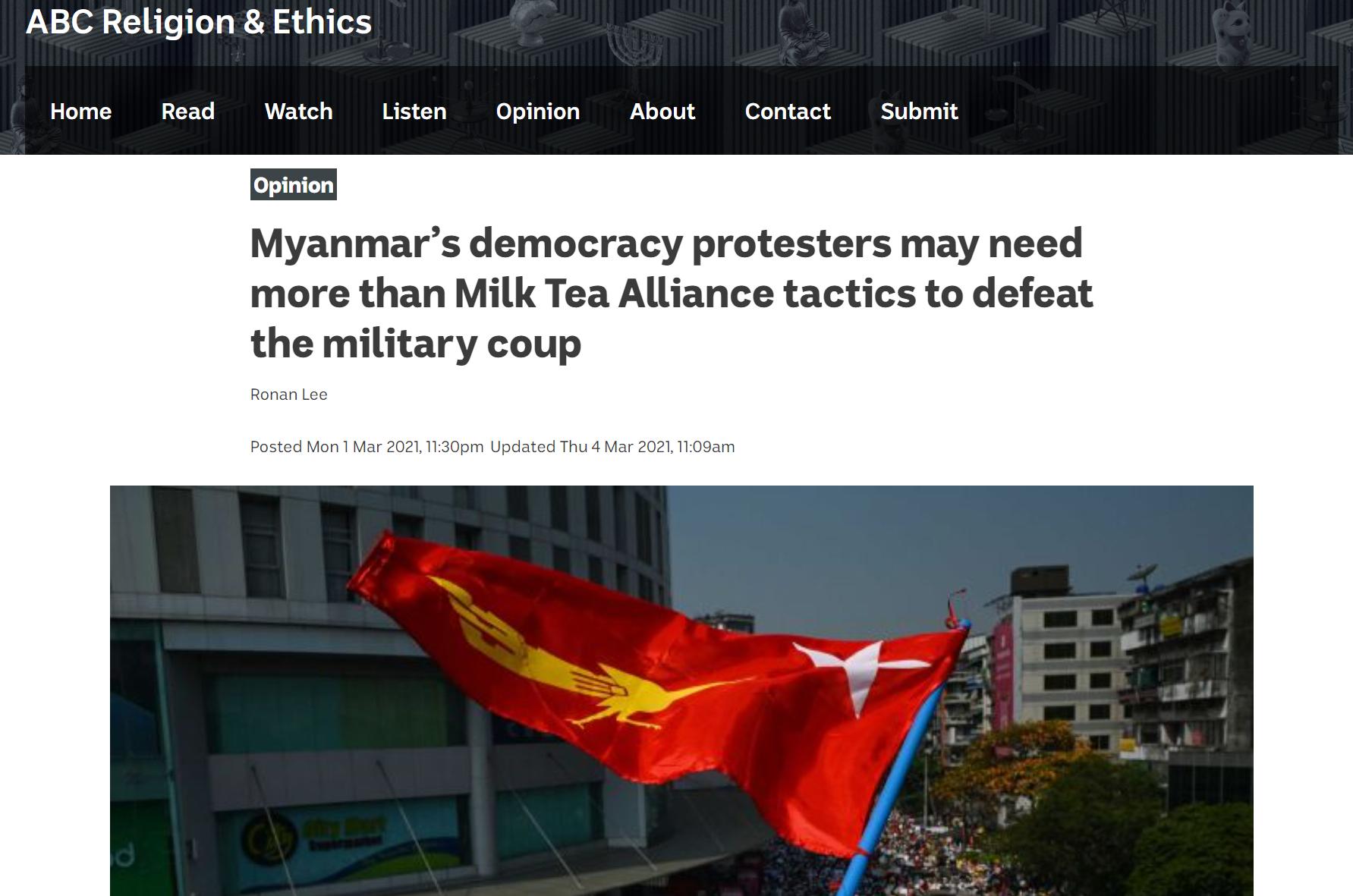
A brutal crackdown could happen any day. Military violence is expected every day. Soldiers have casually killed peaceful protesters throughout the four weeks since Myanmar’s military undertook a coup to remove the country’s civilian government. Military violence has incrementally, but steadily increased. Bravely, millions of peaceful protesters still take to Myanmar’s streets to oppose the military coup and demand the release of the country’s civilian leaders including Aung San Suu Kyi. By employing tactics learned from other recent Asian protest movements, they have seemingly confounded Myanmar’s military, which has struggled to deal with the nature of protests and their scale. READ THE FULL ARTICLE HERE.
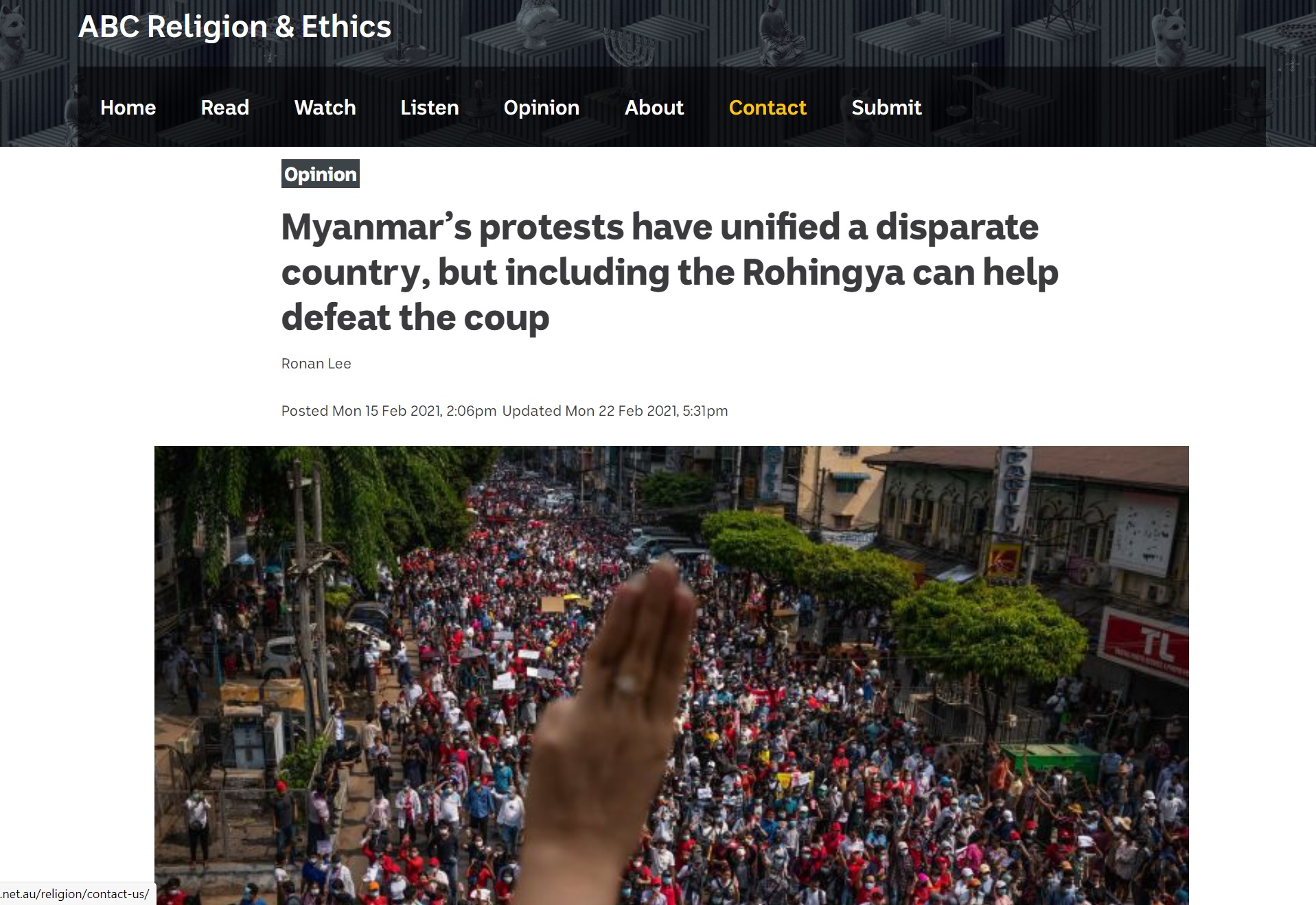
This article was first published by ABC Religion & Ethics on 15 February, 2021.
Saffron robed Buddhist monks, leather clad punks, shirtless muscle-bound hunks, taffeta ballgown wearing “princes protesters”, chefs in toques, black robed lawyers, construction workers in hard hats, nurses and doctors in scrubs, tattooed martial artists, nat spirit worshipers, civil servants, drag queens, trade unionists, farmers, teachers, taxi drivers, Christians, Hindus, Muslims, the old, the young, women, men, girls and boys — this week and last, these were just some of the groups who joined the biggest protests against military rule ever seen in Myanmar. READ THE ARTICLE HERE.
Foreign firms are under pressure to cut ties with the military following the February 1 coup. Protests against the February 1 military coup in Myanmar are spreading, despite internet shutdowns and threats of arrests. International firms are under growing pressure to cut ties with the army’s vast business empire.
For years, rights groups and the United Nations have revealed extensive corruption by military-controlled firms, with revenues going directly to army generals and their families. So will pulling foreign investment be enough to force the coup leaders to bring back civilian rule?
Presenter: Mohammed Jamjoom
Guests:
Debbie Stothard – Founder and coordinator of ALTSEAN-Burma, a network of ASEAN organisations working to support human rights and democracy in Myanmar
Ronan Lee – Visiting scholar at Queen Mary University of London, author of Myanmar’s Rohingya Genocide
Tharaphi Than – Associate professor at Northern Illinois University