Ronan Lee & Jose Antonio Gonzalez Zarandona (2026). War, Genocide, and Heritage in Myanmar. The Palgrave Encyclopedia of Cultural Heritage and Conflict. Link to chapter here.
In Myanmar (also known as Burma), tangible and intangible cultural heritage have been instrumentalized as tools of genocide against the Rohingya minority, and have commonly been used as key markers of difference between conflicting actors in the long-running civil war. Myanmar has seen widespread destruction of tangible cultural heritage, government restrictions on minority cultural practices, but also the privileging of certain heritage sites through government protection and promotion practices. This entry examines patterns of cultural heritage destruction and protection, which are presented within a framework based on the key, often intersecting, goals of the principal actors: genocide, war, and state-building.
Rokon Uddin & Ronan Lee (2025). Preference Falsification: Making Sense of Public Opinion Surveys in Autocratising Bangladesh. Asian Affairs. Link to article here. OPEN ACCESS.
As Bangladesh became increasingly authoritarian under Sheikh Hasina’s leadership (2009–2024), respondents to public opinion surveys became more likely to falsify attitudes about domestic politics, including their satisfaction with government and prime ministerial performance. In this article we apply preference falsification theory to a newly created dataset using publicly available survey data from one of the most widely circulated newspapers in Bangladesh, Prothom Alo (2009–2013), and from the International Republican Institute (2013–2023) to gain insights into domestic public opinion trends that reach beyond the results of the original surveys. By acknowledging that respondents were likely to have falsified responses to some extent in opinion surveys undertaken between 2009 and 2023, our study highlights patterns indicating lower levels of satisfaction with the performance of Bangladesh’s government, stronger public support for the opposition (and for an independent pre-election caretaker government) than are indicated by published public opinion survey results alone. These findings are particularly relevant in the aftermath of Bangladesh’s controversial 2024 election and the subsequent overthrow of Hasina’s Awami League administration.
Rudabeh Shahid & Ronan Lee (2024). Saffron Ethnocracy: conceptualising ethnocracy in India, Myanmar and Sri Lanka. Journal of Ethnic and Migration Studies, 1–19. Link to article here.
Myanmar’s political system during the 2010–2021 period shares much in common with the political systems of neighbouring India and nearby Sri Lanka, and so this article identifies all three as ethnocratic, arguing these polities represent a variation of ethnocracy which leans authoritarian and is specifically Islamophobic. This article builds on discourse about the nature of ethnocracy to introduce the label ‘Saffron Ethnocracy’, which is used to identify the specific Islamophobic variation of ethnocracy observable in India, Myanmar and Sri Lanka. The saffron label recognises the common use of saffron clothing as identity markers by Hindus and Buddhists, the dominant religious groups in each country. While all three South Asian countries were certainly procedural democracies during the period studied, majoritarianism strongly impacted their political systems, affecting citizenship laws and practices, contributing to assertions about civilisational uniqueness of dominant groups, empowering religio-political institutions of the dominant groups, dramatically curtailing freedom of expression and severely undermining the standing of minorities, particularly Muslim populations.
Ronan Lee (2024), ‘Islamophobia and Genocide: Myanmar’s Rohingya Genocide’, in Sahar F. Aziz, and John L. Esposito (eds), Global Islamophobia and the Rise of Populism (New York, 2024; online edn, Oxford Academic, 23 May 2024), https://doi.org/10.1093/oso/9780197648995.003.0014.
The Rohingya’s exclusion from Myanmar’s political community, the genocide against them that this enabled, and their high-profile 2017 forced deportation provide a disturbing illustration of how quickly Islamophobia can be weaponized to diminish the social and political standing of a previously well-integrated minority. While Islamophobic policies might have been expected from Myanmar’s military rulers, these practices continued in a democratic context and were aided by improved access to modern media technologies. Using language about demographic threat that mirrored Great Replacement narratives, Buddhist nationalists successfully advocated for policies that severely limited Muslim rights and had devastating consequences for the Rohingya. Despite Myanmar’s moves toward democracy, once anti-Muslim and anti-Rohingya speech was normalized, the path to genocide was a short one and occurred with little meaningful public outcry. This should provide a serious warning that in democratic contexts, normalized hate rhetoric can lead to atrocity crimes against even previously well-integrated groups.
Ronan Lee (2024), Research in the information age and the risks of researcher vicarious trauma, Social Science Information, Vol 63, No 1. Link to article here. OPEN ACCESS.
Exposure to traumatic material during research may traumatize scholars, contributing to negative health outcomes and curtailing research work. This article argues the social sciences have been slow to address the challenges engagement with potentially traumatizing material pose to researchers. The article reviews key literature on vicarious or secondary trauma and outlines how it might affect scholars. It considers examples from the professions, and scholarly fields including the technology industry, international development, countering violent extremism studies, and genocide studies which have already begun to grapple with these challenges. A case study focused on Myanmar-focused social sciences research outlines how recent improvements in mobile phone camera technology, Internet availability, and international linkages enabled by social media increase researchers’ exposure to potentially traumatizing material. A description of Researcher Vicarious Trauma is proposed and suggestions for how scholars, institutions, and professional associations might positively tackle the contemporary challenges of Researcher Vicarious Trauma are made.
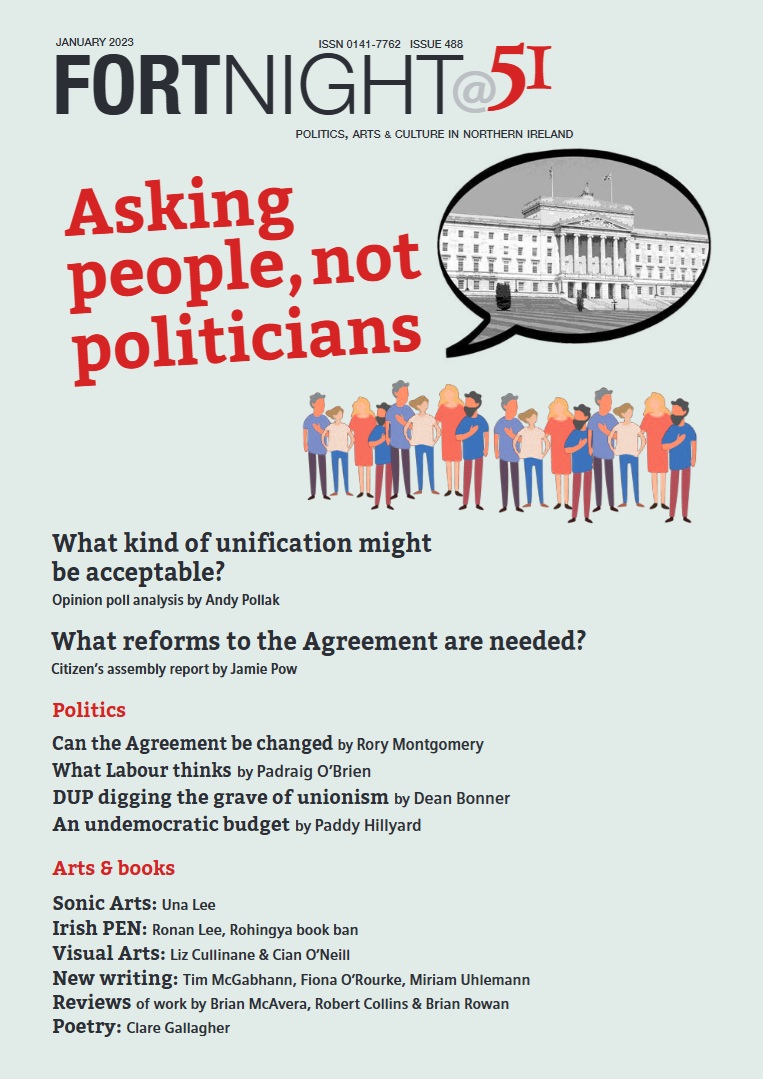
Ronan Lee (2023), Rohingya Book Ban. Fortnight, No 488, pp. 26–28. https://www.jstor.org/stable/27220842. Link to article here. OPEN ACCESS.
This article examines the Myanmar military junta’s 2022 banning of my book ‘Myanmar’s Rohingya Genocide: Identity, History and Hate Speech”. It considers the military’s repression following the 2021 coup through the lens of political imprisonment, censorship, and the ongoing genocide against the Rohingya. The banning of scholarship documenting Rohingya indigeneity illustrates the regime’s fear of historical truth and political solidarity. By linking genocidal practices against ethnic minorities with broader authoritarian repression, the article argues that attempts to silence evidence of past crimes have instead amplified international awareness and strengthened resistance to military rule.
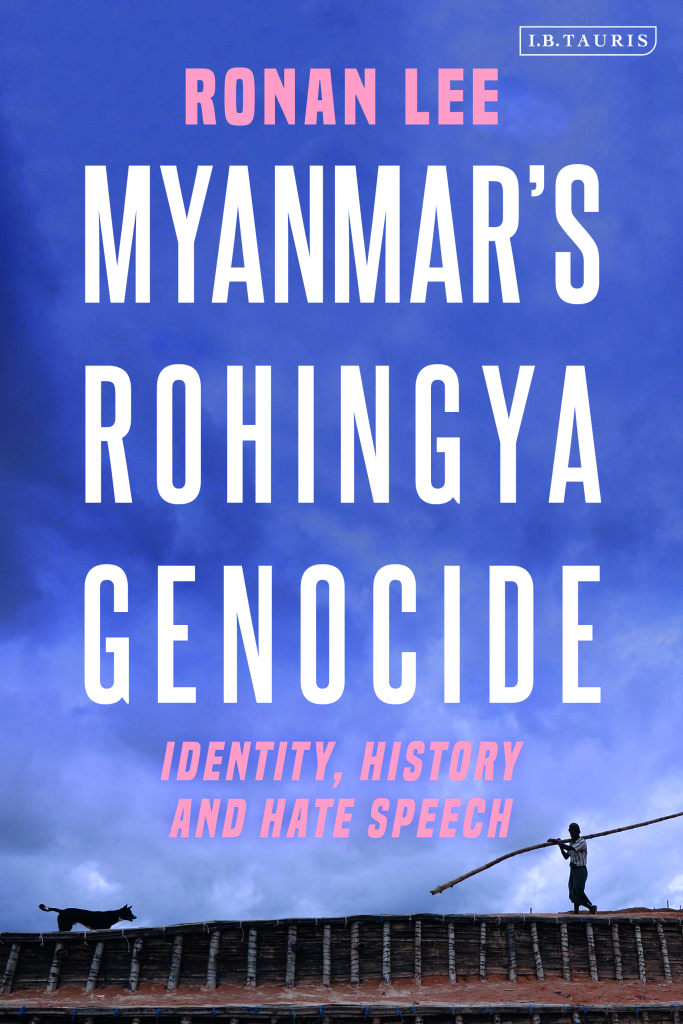
Ronan Lee (2021). Myanmar’s Rohingya Genocide: Identity, History and Hate Speech. London: Bloomsbury. Available here: https://www.bloomsbury.com/uk/myanmars-rohingya-genocide-9780755602476
Genocide brought the Rohingya people to global attention. Decades of appalling human rights abuses and a shockingly brutal military crackdown forced Rohingya into the world’s largest refugee camp adjacent to the Bangladesh-Myanmar frontier. Myanmar’s civilian leader, Nobel Peace Prize laureate Aung San Suu Kyi appears to be presiding over atrocity crimes and human rights violations on an enormous scale yet defends her country and its military against genocide accusations. This unique study combines Rohingya testimony with extensive historical research to outline and assess the full scale of the disaster faced by this mostly Muslim community. Casting new light on Rohingya identity, history and culture, this will be an essential contribution to the study of the Rohingya people and to the study of the early stages of genocide.
Ronan Lee (2021), Myanmar’s Arakan Rohingya Salvation Army (ARSA): An Analysis of a New Muslim Militant Group and its Strategic Communications, Perspectives on Terrorism, Vol 15, No 6. Link to article here. OPEN ACCESS.
The Arakan Rohingya Salvation Army (ARSA) has been central to two major Myanmar military operations against Rohingya communities that have led to large-scale cross-border forced migrations to Bangladesh. This article describes the context for ARSA’s emergence, examining the Rohingya’s history in Myanmar, the nature of political violence in the country, and the history of Muslim militancy in Myanmar’s Rakhine state. ARSA’s emergence as a militant Muslim group is outlined and elements of ARSA’s strategic communications, including its Twitter presence, are analysed, allowing the author to draw some conclusions about the nature of ARSA and its priorities.
Ronan Lee (2019), Myanmar’s Citizenship Law as State Crime: A Case for the International Criminal Court, State Crime Journal, DOI: 10.13169/statecrime.8.2.0241 Link to article here. OPEN ACCESS.
This article argues that Myanmar’s authorities subject the Rohingya to human rights violations that can be accurately described as the crime of apartheid. Myanmar’s discriminatory application of its citizenship laws and processes is central to this crime, yet while Myanmar is not a signatory to the Rome Statute of the International Criminal Court, the court’s jurisdiction remains limited. However, Myanmar’s government has brought this crime to the territory of International Criminal Court (ICC) member state Bangladesh. Because Myanmar’s government insists upon Rohingya participation in discriminatory citizenship processes as a precondition of refugee repatriation to Myanmar, this presents the ICC with an opportunity to assert its jurisdiction. While current ICC investigation focusses mostly on alleged crimes committed by the Myanmar military, crimes associated with Myanmar’s citizenship processes would likely be the responsibility of Myanmar’s civilian government, including State Counsellor Aung San Suu Kyi, making Myanmar’s civilian political leaders liable for the first time to ICC prosecution.
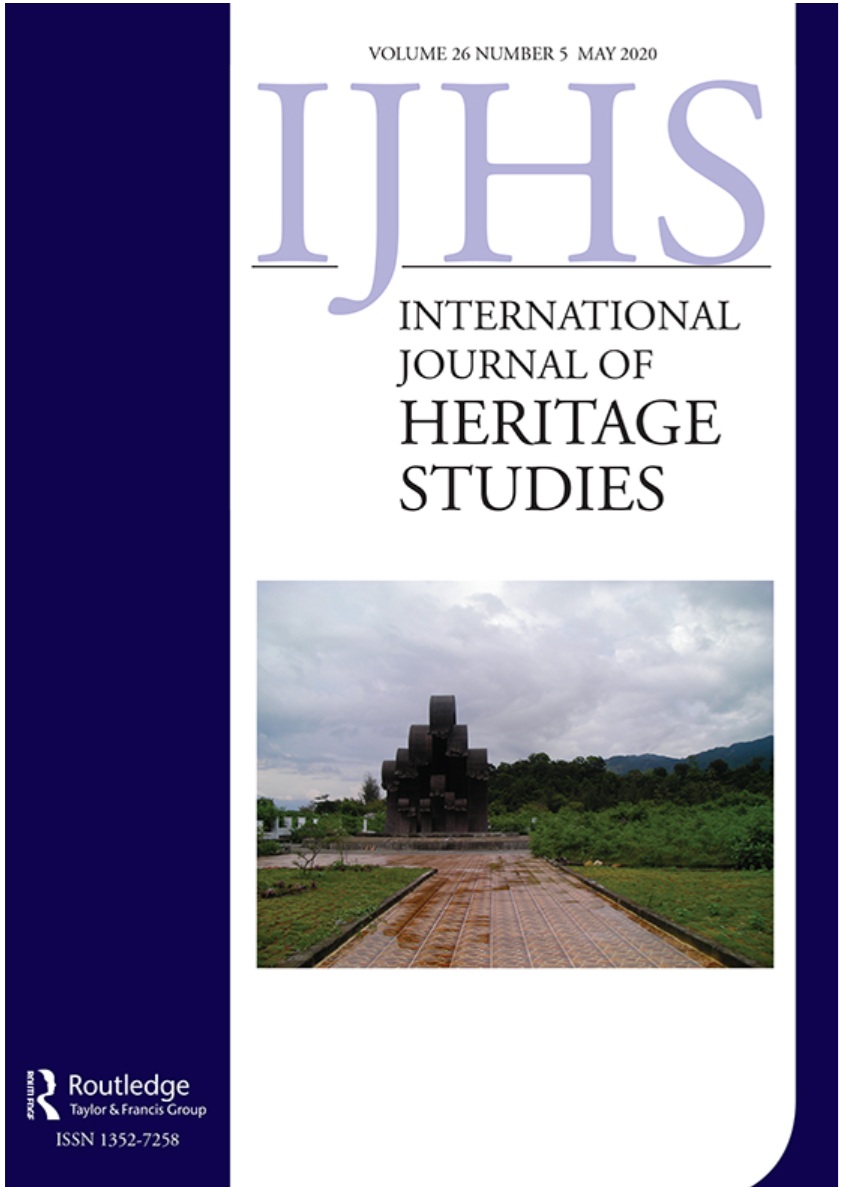
Ronan Lee & José Antonio González Zarandona (2019) Heritage destruction in Myanmar’s Rakhine state: legal and illegal iconoclasm, International Journal of Heritage Studies, DOI: 10.1080/13527258.2019.1666294 Link to article here.
In this article we map heritage destruction in Myanmar’s Rakhine state. We outline the historic and contemporary political context in Myanmar explaining the background of the Rohingya Muslim ethnic group and addressing the contribution of religion and political change to anti-Rohingya discrimination and violence in Myanmar. We trace patterns of heritage destruction as legal and/ or illegal iconoclasm and specify the key elements of heritage destruction in Rakhine state. Our analysis focusses on the use of heritage destruction in Rakhine state as a tool of genocide, and we suggest that heritage destruction in Myanmar’s Rakhine state ought to be understood as part the authorities’ policies of genocide against the Rohingya. We conclude the article with a call for UNESCO to act to extend its ‘Unite4Heritage’ campaign to include the destruction of heritage by state actors.
Ronan Lee (2019). Extreme Speech in Myanmar: The Role of State Media in the Rohingya Forced Migration Crisis, International Journal of Communication. Vol 13, pp 3203-3224. Link to article here. OPEN ACCESS.
This article considers the role of the state authorities in perpetrating extreme speech and the processes by which state power is used in normalizing hateful expressions against minoritized communities. Drawing attention to Myanmar’s 2017 Rohingya crisis, a human rights and humanitarian catastrophe, the article examines how the state media publication, the Global New Light of Myanmar newspaper, has actively produced anti Rohingya speech in its editions and influenced violent narratives about the Rohingya Muslims circulating on social media. It shows how official media contributed to a political environment where anti-Rohingya speech was made acceptable and where rights abuses against the group were excused. While regulators often consider the role of social media platforms like Facebook as conduits for the spread of extreme speech, this case study shows that extreme speech by state actors using state media ought to be similarly considered a major concern for scholarship and policy.
Ronan Lee (2016). The Dark Side of Liberalization: How Myanmar’s Political and Media Freedoms Are Being Used to Limit Muslim Rights, Islam and Christian–Muslim Relations. Vol 27, No 2, pp 195-211. Publication Award, Deakin University Faculty of Arts & Education Publication Award 2016. Link to article here.
This article describes how divisive groups have taken advantage of Myanmar’s new political and media freedoms to pursue an agenda that will limit the civil and political rights of the country’s Muslim population. The article argues that enforcement of the four Protection of Race and Religion Laws will disadvantage Myanmar’s already politically marginalized Muslim residents by creating a de facto religious test for full Myanmar citizenship rights. The article examines both the positive and negative aspects of Myanmar’s liberalizations, the nature of the ‘Protection of Race and Religion’ legislative package and how this will interact with Myanmar’s citizenship laws.
Ronan Lee (2014). A Politician, Not an Icon: Aung San Suu Kyi’s Silence on Myanmar’s Muslim Rohingya, Islam and Christian–Muslim Relations. Vol 25, No 3, pp 321-333.
University Medal – Neil Archbold Memorial Medal and Travel Award for best peer-reviewed journal article of 2015. Link to article here.
In Myanmar (also known as Burma), the Rohingya are a persecuted Muslim minority living mainly in northern Rakhine State. Aung San Suu Kyi, the iconic leader of Myanmar’s opposition party the National League for Democracy (NLD), is championed as the voice of the people. However, on the matter of the Rohingya’s persecution she has been notably silent. This article examines the possible reasons for Suu Kyi’s silence and argues that Buddhist–Muslim political relations in Myanmar are central to understanding the reasons behind Suu Kyi’s position on the Rohingya. It is suggested that various factors, including the history of the Rohingya in Myanmar, the NLD’s attitude towards the Rohingya, Suu Kyi’s sense of obligation to her father’s political legacy, and Suu Kyi’s views on ethnicity, are creating a political environment in which Suu Kyi is presented with pragmatic political reasons for staying silent. Given Suu Kyi has the potential to become a future national leader, an understanding of her behaviours towards a sizeable persecuted Muslim minority is important. This is particularly the case when consideration is given to the contemporary pressures on Muslims to embrace radical politics and the implications this could have for Myanmar and the region.
 Dr Ronan Lee